Micro-Reviewing Every Book I Read in 2025
Maybe I didn’t hit my goal number of books read in 2025. But you know what? A slower reading year means an opportunity to micro-review every single book I finished. Let’s do this!

If you’re part of the internet’s bookish communities, you’ll know it’s the time of year when everyone puts their lists together: lists of their top ten books of the year, lists of their five-star reads, lists of all the new releases they’re looking forward to, and so on. It’s like Christmas all over again (and by the time I’ve added everyone’s recommendations to my TBR, it will be!)
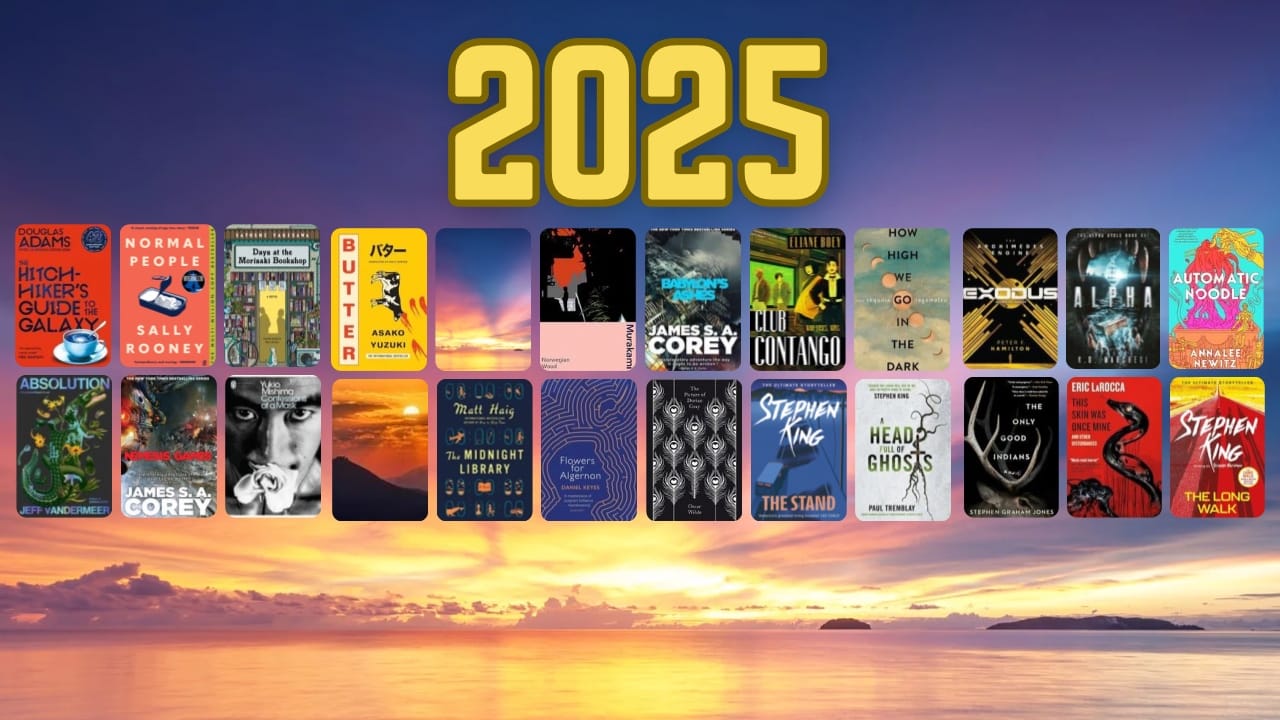
Since I didn’t have a very big reading year in 2025—with a grand total of 25 books read, and one DNF’d which I make it a rule not to review—I thought I’d do something a bit different while I have the opportunity to with so few books. So here we go, a micro review of every book I read and finished in 2025, with emphasis on the why and the how rather than the what (a link to The Storygraph listing is included for each book if you want to read the blurb and find out what it’s about). Also, in case you’re wondering, here’s why there are no star ratings.
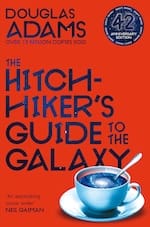
The Hitchhikers Guide to the Galaxy - Douglas Adams
What a way to start the year. Classic science fiction comedy gold that took me far too long to start reading (this was a Jólabókaflóðið gift from a good friend). Its witty, absurdist humour is very British, bordering on being too clever for its own good, but balanced out with the right amount of silliness that makes this an easy recommendation for people of all ages. There’s a reason everyone tells you to read this one. Plus the references are well and truly embedded in popular culture now. So, y’know… if your heart is as black as the void and you hate funny books for some reason, you should still probably read it for the educational value and the answer to the meaning of life. Yes, Kris, I’m talking to you. Wink.
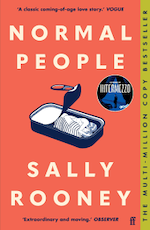
Normal People - Sally Rooney
People are complicated. Growing up is complicated. Navigating friendships and relationships is complicated, especially across different socio-economic backgrounds. Sally Rooney manages to capture the essence of all of that in a way that’s believable, relatable, and filled with empathy. If you’re the kind of person who is an observer, a people-watcher or someone who tries to figure out why people are the way they are, you’ll enjoy this one. I’ve also heard enough complaints from people who say it’s boring and nothing happens. Ignore them and read it anyway. I also made a short video about the book.
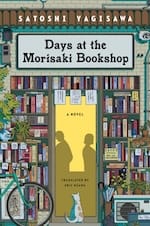
Days at the Morisaki Bookshop - Satoshi Yagisawa
It’s a book about books, what’s not to like? One of the most recommended books in the cosy Japanese fiction genre, with just the right amount of emotional punches to feel impactful rather than overly sentimental, but what I liked most about it were all the book recommendations from Japanese new-to-me authors that I noted down with enthusiasm. I read one book and gained at least five more.
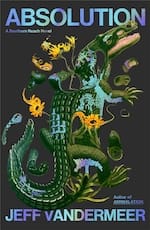
Absolution - Jeff VanderMeer
I asked Kris what I’m supposed to write for a micro review of Absolution, and we settled on “WTF” and “Kris still doesn’t like rabbits”. Absolution is the fourth book in the Southern Reach / Area X series. It’s a trippy, cerebral, and painfully beautiful science fiction environmental horror story (or stories, plural) that—sort of—provides some closure on questions from the earlier books while simultaneously opening Pandora’s Box once again. VanderMeer assures us there are real answers to be found here, and basically calls us out on our idiocy (our highlight of 2025, honestly). Kris and I made a video discussing it, and it goes off the rails about as much as the book does.
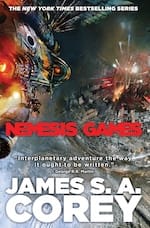
Nemesis Games - James S. A. Corey
At this point in the series (Nemesis Games is the fifth book in The Expanse) everything’s blurring together a little. This book sticks in my mind more than some because of the major plot points that project the overarching story forward. As has been the trajectory for the last several books, the emphasis is on the fragile political situation, but there are some punchy, emotional character moments here, too, that reminded me how well this series as a whole balances world-building and character development.
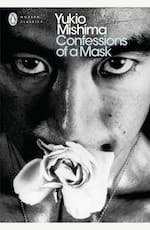
Confessions of a Mask - Yukio Mishima
This book knocked the wind from my sails. My first Mishima book, and even knowing just a fraction about the author’s life, it’s difficult to read this book in isolation from its context, especially because it reads, at least partially, as memoir. That blurring of fiction and non-fiction is what I found most captivating about Confessions of a Mask. It’s also incredibly sad—tragic, even—and beautiful. A challenging read in all the ways important literature should be challenging.
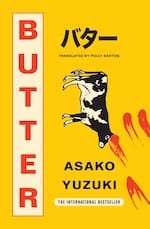
Butter - Asako Yuzuki
I enjoyed the premise of this book far more than the execution. On paper, it sounds thrilling with an important feminist slant. In actuality, it’s a very meandering slow burn which I usually have no issue with—this is trait typical of Japanese fiction—but felt monotonous, overly lengthy, and incoherent on this occasion. However, if you’re a foodie, or have an interest in Japanese society and culture, you’ll likely find some enjoyment and interest here.
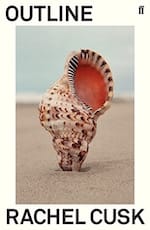
Outline - Rachel Cusk
Cusk strikes me as an author’s author—and I say that having read only this one book so far in the trilogy. If you appreciate sparse, restrained prose, conversational storytelling, exquisite attention to detail, and all the little things that happen in between the big things (i.e. the stuff that really makes up a life), you’ll find a lot to love with Outline. It’s one of those books that, as a writer, I find particularly inspiring. It reminds me of the flexibility of language and storytelling, and that a good story isn’t always about what happens, but how it happens, what you notice, and what you don’t say.
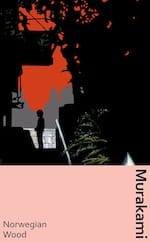
Norwegian Wood - Haruki Murakami
My second Murakami novel (the other being Kafka on the Shore and excluding What I Talk About When I Talk About Running) and I’m still not quite sure where I land with it. I still think about it often, though not as much as Kafka, and despite it’s problematic female characters. I found it to be a very emotionally taxing read with its themes of grief and mental health. But there’s just something I find deeply alluring about Murakami’s stories, and particularly his characters, that evades a coherent explanation as to why. It’s the weirdness, the odd feeling that lingers, the dreamlike quality to them. Norwegian Wood, arguably his most realistic, least magical book, still made me feel that way. And that says… something. I’m not sure what. But something.
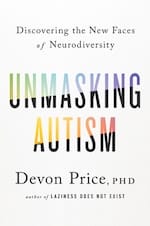
Unmasking Autism - Devon Price
I’ve read a fair few non-fiction books about autism. This one offers the best explanations and the most logical and practical advice for both autistic folks and neurotypical folks alike. I’ve followed Dr Devon Price’s work online for several years and enjoy their ability to articulate their autistic experience (and how their autistic and trans/queer identities interact). But, like every book about autism, it’s written through the lens of a singular experience and understanding, so keep that in mind if you read it—though it does a better job than most of including anecdotes and experiences from autistic folks with higher support needs.
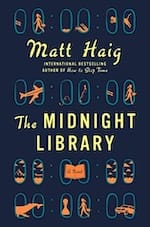
The Midnight Library - Matt Haig
I can understand why this book has such mainstream appeal: its easy to read, very tropey, and its themes deal with regret and ‘the path not taken’ which speaks to us all universally. But the main reason I picked it up is because Matt Haig is such a wonderful advocate for mental health and autism. He’s a guy who has been through it and is honest about his experiences. So I was curious how that translated to his fiction. I enjoyed the book well enough while reading it. It’s perhaps a little too obvious and sentimental for my personal tastes, but it’s an easy recommendation for the mostly non-reader in your life, or anyone also currently going through it. It’s hopeful and optimistic, and good grief could we all use some of that right now. And if you need more convincing, here’s an article I wrote about the book.
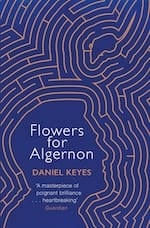
Flowers for Algernon - Daniel Keyes
Although it’s only been half a year since I read it, I already know Flowers for Algernon is a book that will stay with me for life. It’s as brilliant as it is devastating. Not only does it have an emotionally powerful message and explores a topic that’s as appealing to us today as it was in 1966 when it was first published, but it’s also one of those treasures where the form of the book (i.e. how the story is told—epistolary, in this case) has a direct connection to what the book is about. I recommend this book to everyone and gushed about it at length here.
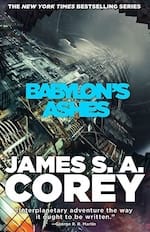
Babylon’s Ashes - James S. A. Corey
Where the previous book Nemesis Games broke everything apart, Babylon’s Ashes attempts to mend it all together. The sixth book in The Expanse series, it acts as the resolution to much of the set up and chaos that happened prior, and the two books fundamentally work as a pair—more than any others in the series, at least that I recall. While not as riveting as the prior instalment, by the end I was left excited about where the story’s going next. I should (hopefully) conclude this series in 2026, then I can finally watch the TV show, play the Telltale video game, and be up to date for The Expanse: Osiris Reborn which looks freaking phenomenal.
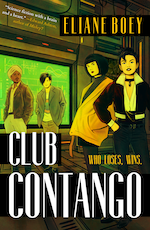
Club Contango - Eliane Boey
This is one of the more ambitious novels I’ve read this year, and I’ve truly got to hand it to author Eliane Boey who manages to pack a lot into its short 275 pages and not have the ideas crumple under their own weight. Club Contango is an engaging near-future techno thriller with a bit of cyberpunk and noir mystery flair thrown in for good measure. It’s the mystery that kept me turning the pages, but it’s the wonderfully complex, diverse, and flawed characters that I took with me long after I’d finished it. Boey’s writing range is wonderfully dynamic, with detail-filled scenes (especially of food!) showcasing the richness of Freeport, alongside some intimate character moments that highlight the importance of (found) family and leaning on others. Best of all, it’s pretty damn queer and I’m here for it.
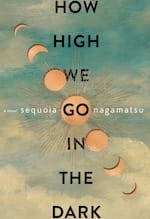
How High We Go in the Dark - Sequoia Nagamatsu
A standout read for me this year, and another brilliant example of the way narrative form and structure can shape and influence the story being told. The book is actually a series of interconnected short stories that take place over time and build on a larger narrative, the first of which involves a major event that shapes the course of humanity’s future: a virus is unearthed in the Arctic Circle due to climate change. From there, each story gives us a glimpse into the repercussions of such an event and the people it uniquely affects over time. Each story has a different emotional resonance, but almost all of them worked to move me deeply in one way or another. I wasn’t ready for this book and had no idea what I was getting into, but it wouldn’t let me go. I highly recommend the audiobook version with its multiple narrators for this one.
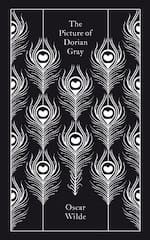
The Picture of Dorian Gray - Oscar Wilde
Over the years, The Picture of Dorian Gray has eluded me for one reason or another. I finally read it as a buddy read with Kris, and although we discussed it at length, I feel there’s still so much to say about this book. It’s one of those novels I admire and respect far more than I enjoy. Its prose is beautiful, its themes shockingly (and increasingly?) relevant, and Lord Henry has become one of my favourite ever characters in a fictional work. But the act of reading it was… challenging, and I still can’t put my finger on why. I think it has something to do with
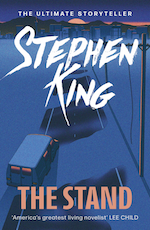
The Stand - Stephen King
This is officially the longest book I’ve ever read in my life, coming in at a whopping 1211 pages, or almost 48 hours for the audiobook. But it’s such a page-turner that my time with it flew by. For a book I was most looking forward to (and daunted by) for my chronological Stephen King project, it did not disappoint. Although not as “sci-fi” as I hoped it would be, the meandering slice-of-life aspect to this novel, and the memorable characters that have stuck with me, made this book one of the most enjoyable of the year (surprising the heck out of yours truly).
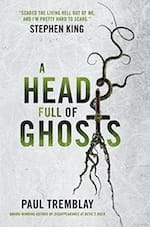
A Head Full of Ghosts - Paul Tremblay
My first (and certainly not last) Paul Tremblay book was a smash hit. A modern take on the possession sub-genre, A Head Full of Ghosts did things I didn’t know horror stories could do. It’s a fairly straightforward story all things considered, though it does the story-in-a-story thing to great effect, and also shows a lot of respect for the horror genre from within the story in a very meta, self-referential way. There were several laugh-out-loud moments for me throughout the story, and some pretty tense moments, too. As someone who really doesn’t read horror, I loved this book.
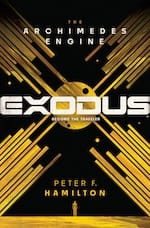
EXODUS: The Archimedes Engine - Peter F. Hamilton
I’m not going to lie. This book was a slog to get through. But I was determined because I’m hyped for the video game for which this book (the first in a duology) is a tie-in. There is so much to like with this book, namely the extensive and intricate world-building, and some of the unique ideas that set up the premise for the game such as the time dilation, the Travelers, and the Celestials and their solution to immortality: The Mindline. But… The story itself is dense, slow and unevenly paced, and the characters clearly exist to showcase the world that’s been created rather than the world supporting the characters. Because of that, I can only recommend it to those interested in the upcoming video game, and those who prioritise world-building over characters. Kris and I discussed it in-depth in a Books & Bevvies episode, and—surprisingly—we were both on the same page for a change.
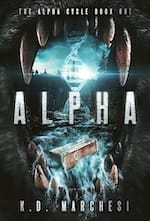
ALPHA - K. D. Marchesi
I’m sure it’s damn near illegal for me to say any more about ALPHA after the waggish review I wrote, but when one of your best mates publishes his debut novel, it’s only fitting that we unleash the puns to ensure a barking good time. Jokes aside for a moment, this is a pretty special sci-fi dystopian survival novel that also works as a trans allegory, and I’m immensely proud of Kris for writing and publishing it.
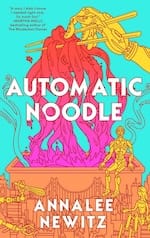
Automatic Noodle - Annalee Newitz
This was my Book of the Year for 2025. It’s one of those books that I felt was written just for me. Sentient robots? Check. Queer themes? Check. Near-future dystopia but still somehow optimistic and cosy? Check. There’s a lot packed into its 160-odd pages, and the whole book can be read as an allegory for the experiences of several marginalised communities, especially queer folk, those with disabilities, and immigrants. What struck me most, though, is the book’s prescience and relevance to our current historical moment, all the while spinning a yarn with a lot of heart—despite being about characters who don’t, in fact, possess that specific organ.
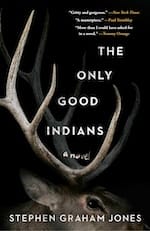
The Only Good Indians - Stephen Graham Jones
I am enamoured with SGJ’s unconventional narrative style, and although I very much enjoyed this book, I think I enjoyed it primarily for its literary qualities. Don’t get me wrong, the story is a fantastic one and for many reasons: it brings into the spotlight some of the issues surrounding the cultural identity and stereotyping of indigenous folk (specifically, in this case, those of the Blackfeet Tribe); and it plays around with the idea of ancient forces tied to the land beyond our understanding as well as psychological horror (and refuses to be clear about the distinction—a narrative device I absolutely love). Taken as a pure horror novel, I’m not sure it’s particularly scary. It’s far too slow and reflective for that. It does get pretty gruesome and distressing at times, however, so be warned.
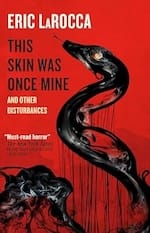
This Skin Was Once Mine - Eric LaRocca
This is a collection of four separate stories that I had wildly different reactions to. The first one was actually my least favourite despite being the title story and the longest. The second, Seedling, was… fine, though I’m sure there was some metaphor in there I’m missing because I refuse to go back and re-read it for clues. The last two, however, were a little more my style, and had elements of humour and shock value that I was rather entertained by. I can respect what appear to be LaRocca’s intentions as a writer: to tease out the stuff from our collective subconscious, to explore themes that are truly disturbing, and to say what is usually left unsaid. Ultimately, though, I’m not sure their books are for me and I doubt I’ll read another. I don’t think LaRocca would mind me saying that. In fact, I’m pretty sure it’s the whole point.
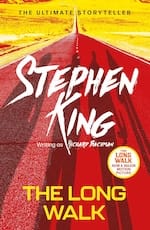
The Long Walk - Stephen King
A high stakes, character-focused horrifically dark dystopian psychological thriller to end the year with. Stephen King is the master of the 'page-turner', but this is the one I read the quickest and in the least amount of sittings. That said, I felt it was always on the cusp of saying something profound about war or about life but never quite got over the line. Shockingly entertaining, though, and pretty dark if you sit and ponder over it too much. I find it fascinating that this was the first book he wrote. It’s arguably better than some of the others that came after.